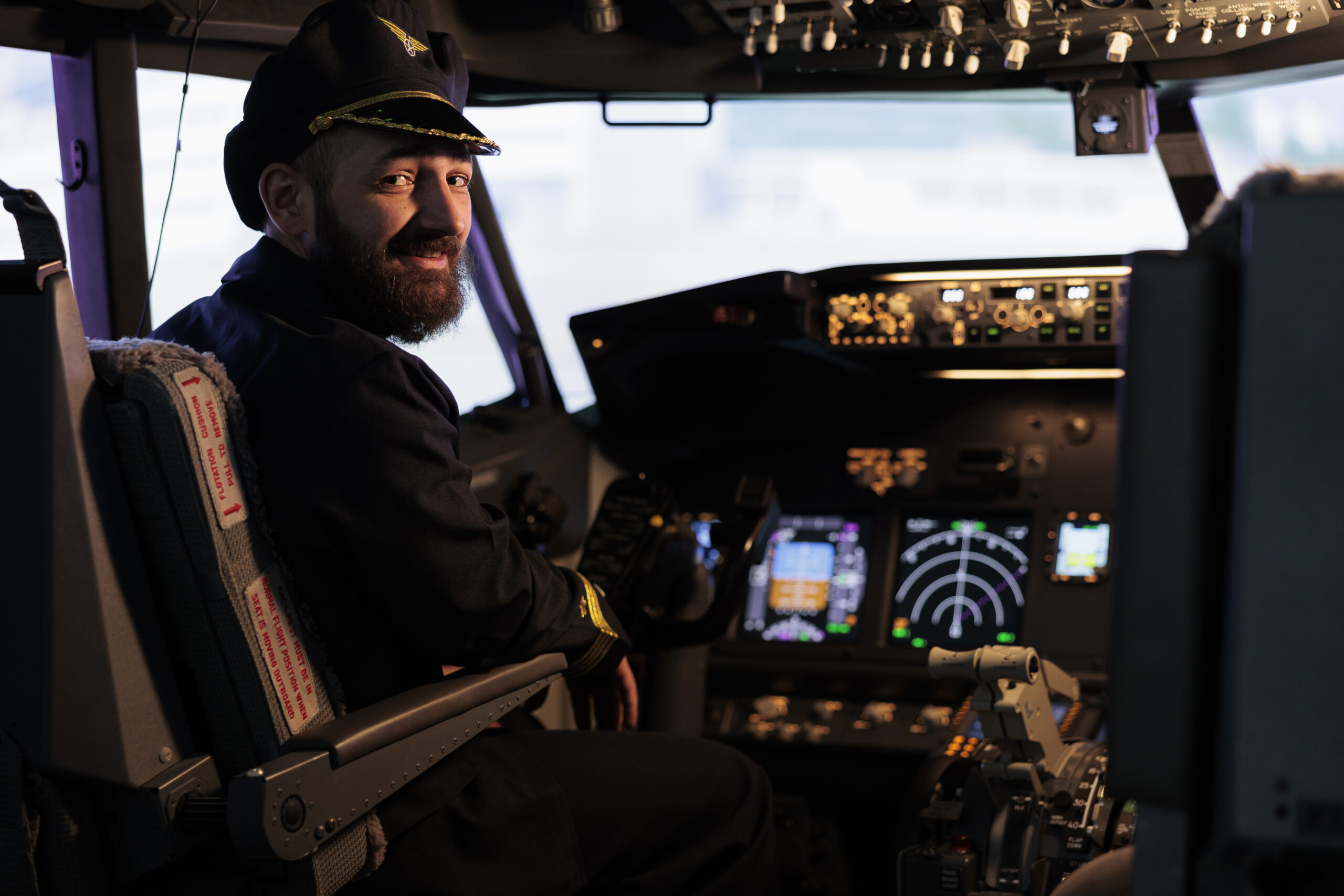
Private Pilot Licence at AirStar International Academy – Begin Your Aviation Journey with Confidence
Turn Your Dream of Flying into Reality
Many people dream of flying an aircraft, and all successful pilots start their training correctly. AirStar International Academy is proud to provide an extensive Private Pilot Licence course for those intending to become pilots. We are a reputable Aviation academy that offers structured training through classroom sessions with practical flying time with certified instructors.
A Private Pilot Licence (PPL) is the best entry point towards both recreational flying and Commercial Pilot Licence (CPL) development. Our seasoned experts will accompany you on your learning journey, ensuring that you build a solid foundation in the fundamentals of flight, aircraft operations, and flight safety.
AirStar International Academy is a proud member of the Best PPL training institute in India, which is recognised for quality education and student-centric training.
What is a Private Pilot Licence?
Private Pilot Licence is a licence to fly an aircraft independently for recreational and personal use. It is the first internationally recognised step in professional aviation training and is a foundation for all future aviation courses of study, giving the aspiring pilot the necessary knowledge and flying experience to advance to higher aviation licences.
A PIL is not designed to lead to commercial flying or to earn a living as a pilot, but it does help to develop the skills, confidence and knowledge required for Commercial Pilot Licence (CPL) and Airline Transport Pilot Licence (ATPL) programmes.
Our Pilot licence training programme at AirStar International Academy is a combination of theory and practical flying to prepare our pupils for safe and responsible operation of aircraft.
Why Choose AirStar International Academy?
One of the most important decisions when considering aviation is choosing the right Aviation academy. We believe at AirStar International Academy that our structured learning, mentorship and practical exposure prepare students for success.
Students select us for PPL training due to our:
Experienced Aviation Mentors
Our instructors are well-qualified in aviation and have experience in the classroom and flying with students, imparting their knowledge to build student confidence both on the ground and in the air.
Industry-Oriented Curriculum
We have a structured curriculum for Pilot licence training, which involves students getting relevant theoretical training first, followed by practical flying.
Practical Flying Exposure
Shooting skills can only be gained through experience. The course covers practical flying training with certified instructors and will help students practice what they learned in the classroom in real flight.
Student-Focused Learning
All learners develop at different rates. We have trained to provide hands-on guidance, frequent assessments, and ongoing support during our PPL training.
The school has a sound base for continued development in the field of aviation careers.
AirStar International Academy is a trusted academy for aspiring pilots looking for the best PPL training institute because our programme equips them for the next phases of their aviation training.
Course Highlights
The Private Pilot Licence course is carefully designed to give students a well-rounded mix of theoretical knowledge and flight training.
Course Duration
6–12 Months
The course duration for PPL can be different for each candidate depending on his/her progress, weather, flying schedule and DGCA requirements.
Curriculum
Students learn 6 Core Aviation Subjects, preparing for practical flight operations.
Training Type
- Practical Flying Training
- Ground School Theory
- Instructor-Led Sessions
- Flight Briefings
- Safety Training
The overall mix of subjects assists students in gaining a good understanding of aviation and in gaining flying confidence.
Eligibility for Private Pilot Licence
We start the PPL admission process by checking the students’ eligibility to train.
Applicants should fulfil the following requirements:
Education
10th Standard Pass with a recognised Board (Minimum).
Age
At the time of enrolment, the person must be at least 16 years old.
Medical Fitness
Flight training begins after successful completion of a valid DGCA Class II Medical Assessment.
English Proficiency
Students should be able to read, write and communicate effectively in the English language since all communication and study materials in aviation are in English.
Our counselling team will support students in the PPL admission process by helping them understand the eligibility criteria and providing guidance with the required documentation.
DGCA Subjects Covered During Training
It is essential to possess a solid understanding of several theories before flying an aircraft. Students at AirStar International Academy are taught in-depth details of DGCA subjects needed for Pilot licence training.
Air Navigation
Discover how pilots plan their flight path, how to use headings, how to interpret charts and how to navigate safely during flight.
Meteorology
To gain knowledge of weather systems, wind pattern, visibility, clouds and the effects of changing weather on flight operations.
Air Regulations
Learn aviation rules, operational procedures, pilot responsibilities and safety regulations set by DGCA.
Technical General
Know how aircraft systems, engines, controls, instrumentation and the technical principles apply to the safe operation of aircraft.
These subjects enable students to make informed decisions and to fly aircraft in a responsible fashion throughout their careers.
Practical Flying Experience
Practical flight training is one of the most exciting aspects of our programme.
Students usually fly 40 – 50 hours with certified instructors. These sessions slowly build them up to learning how to safely fly an aircraft and increasing their confidence in actual flight situations.
Practical training includes:
* Aircraft familiarisation
- Pre-flight inspections
- Taxiing procedures
- Take-off techniques
- Straight and level flight
- Climbs and descents
- Turns and manoeuvres
- Landing procedures
- Flight safety
- Communication with Air Traffic Control
- Decision-making during flight
This practical, hands-on experience translates classroom instruction into flight proficiency, preparing students to take on the responsibilities of a licensed Private Pilot.
Frequently Asked Questions
- What is a Private Pilot Licence?
Private Pilot Licence is a licence granted to people that lets them fly aircraft for personal and recreational use. It acts as the first key towards further pilot training courses.
- What is the time duration of the PPL course?
The PPL course takes about 6-12 months to complete, depending on the student’s progress, weather, and flying schedules and requirements.
- So why is AirStar International Academy for PPL training?
We offer high-quality PPL training and are one of the best PPL training institutes for aspiring pilots, with our expert instructors, well-planned lessons, flight time and individual mentorship.
- What are the admission requirements for PPL?
The PPL Admission involves the following: Eligibility Check, Counselling, Medical Assessment (Valid DGCA Class II) and completion of necessary admission procedures before training.